
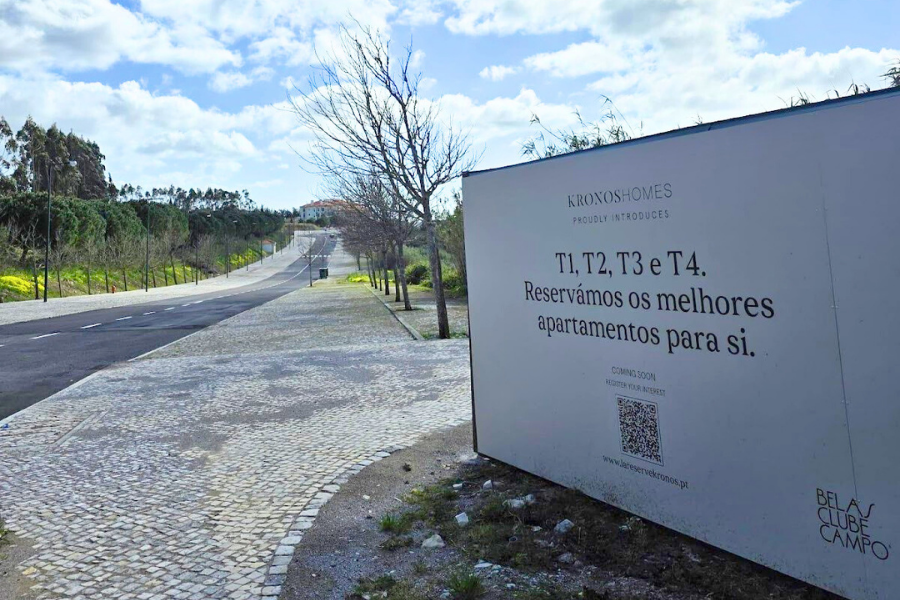
Buying a property still in design/construction (“off-plan”) has always existed in Portugal, but it has taken on a new dimension over the last decade, due to a combination of urban rehabilitation, increased demand (including international demand), growth of new-build projects in premium areas, and more sophisticated commercial practices (showrooms, payment schedules, customization, borderless digital marketing, and new market players).
At the same time, the model’s “hidden risks” have become more visible: construction delays, project changes, defect disputes, and the risk of undercapitalized developers. Today, off-plan investment can be effective and profitable—provided it is treated as a risk-managed project rather than a simple purchase.
1. What Buying “Off-Plan” Means in Practice
From a legal and operational standpoint, the investor commits to buying a future asset (which does not yet exist and may be at an early stage of design or licensing) through three typical stages:
- Reservation (sometimes with a refundable/conditional payment)
- CPCV (Promissory Purchase and Sale Agreement) with a deposit payment and deal conditions
- Deed (completion), after construction is finished and typically after the use/occupancy license is issued (where applicable)
In off-plan transactions, the CPCV is central: it defines timing, quality, consequences of delay, and exit/transfer mechanisms—including the increasingly sought-after assignment of the contractual position. It is important to note that many key details sit in annexes (finish schedules, plans, location, equipment), so the effectiveness of the CPCV depends on it being as complete and detailed as possible, anticipating foreseeable risks in a project whose average completion horizon is typically 2 to 3 years.
2. Advantages (When It Makes Sense)
2.1 Price and Terms
It is common to have greater room for negotiation at launch (or pre-launch), securing the most desirable units (floor level, orientation, view, parking, storage). A discount on the asking price is also typical before the product fully enters the “standard” market channels and becomes exposed to demand response and brokerage commissions.
2.2 Appreciation Up to Delivery
If the market rises (or if the development is scarce within its segment), appreciation may occur between the Reservation/CPCV and delivery of the completed property. This is not guaranteed and depends on the cycle and factors external to construction—therefore it is the greatest risk point for investors whose goal is to “capture” appreciation.
In practical terms, this appreciation corresponds to the difference between:
- the launch/construction-stage price, and
- the price at which the market is transacting/advertising comparable properties when the unit is completed.
It tends to result from three factors:
- risk compression (as construction progresses, the next buyer pays less “execution risk”)
- scarcity of new product (especially in areas with limited new-build supply)
- macroeconomic cycle (interest rates, credit, demand, confidence)
Real example, based on Idealista’s historical data for the parish of Queluz e Belas (average advertised €/m²):
- Jan 2024: 2.384 €/m²
- Dec 2024: 2.765 €/m²
- Dec 2025: 3.046 €/m²
- Feb 2026: 3.189 €/m²
For a project of approximately 24 months (CPCV in Jan/2024 with delivery in Feb/2026), the change from 2,384 €/m² to 3,189 €/m² corresponds to +33.8%. However, appreciation is not automatically profitability. To turn appreciation into actual return, the buyer will need to assign the contractual position under the CPCV or acquire and resell after completion, calculating the costs inherent to each strategy.
Accordingly, when assessing return, it is essential to consider:
- transaction costs (IMT—transfer tax/Stamp Duty/deed-related fees)
- assignment costs (developer fee + legal costs)
- financing costs (if applicable) and the opportunity cost of capital (capital “locked” during project development)
2.3 New Product and Efficiency
New construction tends to reduce maintenance expenses in the short/medium term and, in many markets, increases liquidity for resale/letting. The rationale is straightforward: more modern materials and systems, more predictable performance, and longer warranty horizons. New buildings typically provide better insulation, more efficient windows, and more sophisticated systems, reducing running costs and improving comfort (noise/temperature), which matters both for purchase decisions and rental demand. In general, it is also a more “bankable” product, due to up-to-date documentation and more standardized technical risk.
2.4 Customization
The ability to choose finishes can increase final attractiveness and, in some cases, resale value. The market tends to value improvements that:
- increase functionality or usable area (storage, laundry space, more outlets, well-designed lighting)
- increase durability (resilient flooring, higher-quality finishes)
- improve perceived comfort (better windows/acoustics, properly sized air conditioning)
In a development with many similar units, well-chosen customization can differentiate a unit for resale/assignment, justify a premium, or reduce price negotiation (“it’s not the same as the others”). At early stages, when the condominium regime (horizontal property) can still accommodate adjustments, certain changes are easier to incorporate into the project and to formalize legally within the property documentation.
3. Disadvantages and Risks (Where Things Go Wrong)
Not all off-plan disadvantages are equal. The same problem may be “manageable” for a buyer who intends to keep the property (own use/rental), but fatal for an investor whose goal is to assign the contractual position (exit before completion).
3.1 Construction Delays and Domino Effects
Delays can arise from multiple factors, including licensing, labor shortages, project changes, contractor failures, material shortages, inspections, utility connections (water/electricity/gas), delays in the use/occupancy license, or force majeure—pandemics, wars, extreme weather—producing impacts at different levels:
- financiamento: pré-aprovações caducam; condições de taxa/entrada mudam; pode ser necessário novo processo bancário
- rent: the investor may have to pay rent simultaneously or lose expected rental income
- lost opportunity: delays can cause the investor to “miss the cycle” (delivery when the market has already cooled)
- cost of capital: capital is tied up longer, returns are postponed, liquidity is reduced
For those planning to assign, delays directly affect exit feasibility and price: the next buyer pays less (or does not buy) because they assume more time and risk. For those buying to keep, delays mainly hit cash flow and planning (moving/renting), making it critical to ensure the deed depends on the use/occupancy license when applicable.
Although difficult to eliminate, delay penalties (default interest) and exit clauses should be included in the agreement.
3.2 Changes to the Specifications (“Inferior Equivalents”)
Developers commonly include “equivalent” substitution clauses. In practice, “equivalent” can (even if it should not) mean lower-grade materials, different aesthetics, reduced performance (acoustic/thermal), or brand/model changes without buyer control. This has two effects: it reduces the property’s perceived value and increases the likelihood of disputes at handover.
Mitigating this risk is essential: the CPCV should attach a detailed specification booklet with brands/models or minimum standards, limiting substitutions to equal or superior quality, requiring proof and/or buyer approval for critical items, and recording changes by addendum wherever possible.

3.3 Developer/Contractor Risk (Financial Capacity, Litigation, Insolvency)
In off-plan deals, the investor is partially financing a future product. If the developer/contractor is undercapitalized, has multiple stressed projects, faces significant litigation, or becomes insolvent, the risk ranges from prolonged delays to construction stoppage and court disputes.
From an assignment investor’s perspective, this risk is particularly damaging: the market tends to reject contractual positions linked to financially fragile projects, or demands significant discounts, undermining the liquidity that supports this exit strategy.
Recommended prudential measures:
- developer due diligence (delivered projects, reputation, corporate structure, known disputes, partners, contractor, and financing bank)
- avoid high upfront payments without contractual protection
- negotiate protective mechanisms (milestone payments, guarantees, or other safeguards compatible with the transaction)
3.4 Construction Defects and the Difficulty of “Closing” Corrections Before the Deed
The most common defects in new builds include waterproofing (balconies/roofs/garages), cracks and shrinkage, window systems with leaks or poor performance, insufficient acoustics, leaks in garages and technical areas, and ventilation/exhaust issues, slopes and drains. Many of these issues become fully evident only with daily use over time and once neighbors are living in the building.
The key risk is not merely the existence of defects, but the pressure to complete quickly and the difficulty of closing corrections before signing the deed—especially in developments with many units and multiple simultaneous claims.
If the plan is to assign, it is prudent to avoid overly specific choices and to select units with lower technical risk, ensuring the CPCV grants inspection rights and requires pre-deed corrections (or a retention/condition mechanism). If, on the other hand, the plan is to buy and keep (for own use or rental), a professional pre-deed inspection and a formal snag list are recommended, scheduling the deed only once critical defects are resolved or a clear, documented post-handover correction mechanism is in place.
4. Tax Obligations and Costs (Including Assignment of the Contractual Position)
All real estate transactions are subject to taxes. As a rule, this is most visible at the deed stage, where the following are typically due:
- IMT—Municipal Property Transfer Tax (variable depending on the case and value, up to 7.5% of the sale price)
- Stamp Duty (0.8% of the sale price)
- deed/registration costs and, if financed, stamp duty on the loan
In assignment of the contractual position, taxation is critical and often overlooked, as it departs from the standard pattern and arises before the final completion of the transaction.
As the name indicates, assignment allows the promissory buyer to transfer to a third party their position under the CPCV (rights and obligations), keeping the base contract in place but changing the party. As a rule, it requires the consent of the other contracting party (typically the developer).
Regarding IMT, tax may be due on assignments linked to a CPCV because the law equates certain acts to onerous transfers even before the deed, namely:
- upon signature of the CPCV itself (or an addendum), where the terms expressly allow the promissory buyer to assign the position to a third party, and the CPCV may constitute a taxable event
- upon the assignment, when carried out under that clause
- upon assignment/“resale adjustment” where the deed will be executed directly by a third party, even without a free-assignment clause
The assignment business model also requires extra caution regarding the income treatment of proceeds obtained through assignment.
For IRS purposes (personal income tax), the Tax Authority treats the onerous assignment of a contractual position as a capital gain. The basic formula is: Gain (capital gain) = amount received on assignment – acquisition cost of the rights assigned (and the cost typically corresponds only to the deposit and other amounts paid under the CPCV, as case law has been restrictive regarding deduction of “extra” expenses such as IMT and brokerage fees that may have been paid).
For Portuguese tax residents, “real estate” and comparable capital gains are typically taxed on 50% of the net balance and subject to progressive rates under the applicable regime. For non-residents, since 2023 the treatment is the same, and the former fixed 28% rate has been revoked.
If the assignment is carried out by a company (legal entity), the gain is no longer treated under IRS/Category G and is, as a rule, subject to Corporate Income Tax (IRC), included in the company’s taxable profit.
It is also essential to remember that assigning a contractual position is not the same as selling an already acquired property: ownership has not been acquired, so benefits designed for “sale of a property” may not apply.
It follows that the CPCV structure (with or without an assignment clause) and the form of assignment can significantly affect taxes, timing of taxation, and therefore investment planning in terms of available liquidity.
5. Critical Risks and How to Mitigate Them (The Prudent Investor’s Toolkit)
5.1 A Robust CPCV
- completion/delivery deadline with a defined date or window, tolerance period, delay penalties (default interest) and termination right after X days
- attached and closed specifications (brands/models, energy class, equipment)
- project change rules (limit “equivalents” and require approval for relevant changes)
- milestone-based payments tied to verifiable stages (structure, enclosure, finishes, license)
- pre-handover inspection and snag list with an obligation to correct defects before the deed
5.2 Protection Against Third Parties: Real Effect
In some cases, and subject to formalities, the promise agreement may be granted real effect through an express declaration and registration. This is technical and should be designed case by case, and it serves to protect the buyer’s right against good-faith third parties.
5.3 Developer Due Diligence
Check project history, reputation, litigation, financial capacity, guarantee model, involved service providers, and the number of projects simultaneously underway.
5.4 Defect Management
Document issues, notify in writing, and avoid “tacit acceptance” without recording the condition of the property. Practical evidence (photos, minutes, emails, reports) is decisive.
5.5 Tax and Financial Planning
Modelar o impacto fiscal e timings para estimar liquidez e rentabilidade e assegurar o cumprimento das obrigações, de acordo com a finalidade da compra e do custo de oportunidade associado ao período temporal de desenvolvimento do projeto.
6. The Portuguese Residential Real Estate Market Since 2020 (Statistical Context) and the Impact of the Current Geopolitical Situation
Since 2020, Portugal’s residential real estate market has shown resilience. Despite the initial shock of the pandemic, prices maintained an upward trajectory, supported by historically low interest rates, accumulated savings, demand for better housing conditions, and structurally limited supply.
Between 2021 and 2022, appreciation accelerated in several phases, reflecting strong demand and limited new-build supply. In the 1st quarter of 2022, INE (Portugal’s National Statistics Institute) reported a year-on-year increase of 12.9% in the IPHab (House Price Index), signaling an accelerating cycle. This phase coincided with an international context still favorable to credit (before the peak in rate hikes) and with additional pressure in well-connected urban and suburban areas.
In 2023, the market faced the impact of rapid interest rate increases and tighter financing. Even so, the adjustment was more visible in liquidity (longer decision times and higher price sensitivity) than in a generalized price decline, as prices remained supported by supply scarcity in many markets.
In 2025, the residential market accelerated markedly. INE’s IPHab recorded:
- +16.3% (year-on-year) in Q1 2025
- +17.2% in Q2 2025
- +17.7% in Q3 2025, with existing housing growing more than new-build housing
The most consistent short/medium-term signal for the Portuguese market is that demand remains pressured by structural factors (demographics and migration) and by insufficient supply—a topic highlighted by Banco de Portugal in its December 2025 Economic Bulletin (with a focus on “demographic pressures”), in coordination with analyses by the Institute for Housing and Urban Rehabilitation and the Observatory for Housing, Renting and Urban Rehabilitation.
This tends to support prices even if the pace slows. Nevertheless, other factors must be considered when assessing an investment:
- Affordability and financing: any deterioration in credit/interest conditions affects segments most dependent on bank financing
- New supply: if there is a significant increase in completed construction/licensing in certain corridors, there may be more competition and premium compression (more visible in “standard” product)
- Segmentação: mercados e tipologias tendem a comportar-se de forma mais desigual (imóveis eficientes e bem localizados mantêm procura; produto indiferenciado sofre mais).
- Conjuntura internacional: Mesmo com choque de juros/energia, Portugal tem um fator de suporte: escassez estrutural de oferta em muitos mercados, e procura persistente (embora seletiva). Adicionalmente, em momentos de incerteza geopolítica, dois efeitos opostos podem coexistir:
- Adiamento de investimento (menos apetite a risco global)
- Procura por jurisdições percebidas como seguras (relocação, segunda residência, preservação de capital)
Portugal is often described as a “relative safe haven” jurisdiction within the European context, due to a combination of legal and institutional factors: EU integration (harmonized regulatory framework), eurozone membership (reducing FX risk for EUR investors), and an administrative and judicial system that, despite efficiency constraints, offers normative predictability and formal mechanisms for rights protection—material factors for capital allocation decisions in real assets.
From the standpoint of security and social stability, Portugal is consistently well positioned in international metrics: in the Global Peace Index 2025, Portugal ranks 7th, which is a relevant indicator given its association with stability and continuity for real estate investment, which is by nature medium/long-term.
On the rule-of-law dimension, the World Justice Project ranks Portugal 28th out of 142 countries in the Rule of Law Index 2024 and, in institutional integrity metrics, Portugal achieved an above-average score in the Corruption Perceptions Index 2024, which are positive indicators regarding compliance risk framing, institutional quality, and predictability in the application of rules.
Finally, the country’s ratings trajectory: in 2025, the Government communicated rating upgrades by rating agencies (including references to Fitch and S&P), and in March 2026 there was news of an improvement in Fitch’s outlook. In practice, for the real estate sector, this may translate into perceptions of macro stability, financing costs, and investment appetite.
7. Conclusion
Off-plan investment can be an effective tool, but it is not risk-neutral. Its viability depends not only on “market optimism” but also on the robustness of the CPCV and its annexes, the quality of the developer, and disciplined management of the associated variables. For those intending to assign the contractual position, liquidity and risk perception (delays, financial stress, project reputation) are decisive. For those buying to keep, final quality, the ability to enforce corrections, and predictability of total cost become more important.
In the current geopolitical context and in view of the evolution of the Portuguese real estate market, buying “off-plan” is expected to remain a growing modality.
Therefore, maximizing its potential through a structured and preventive approach is essential. This is where professional support plays a decisive role: a lawyer, tax advisor, and—when appropriate—a construction/engineering specialist help reduce information asymmetries, translate risks into enforceable clauses and guarantees, and above all protect invested capital, ensuring that off-plan is an informed and defensible decision rather than unnecessary exposure to uncertainty.

